
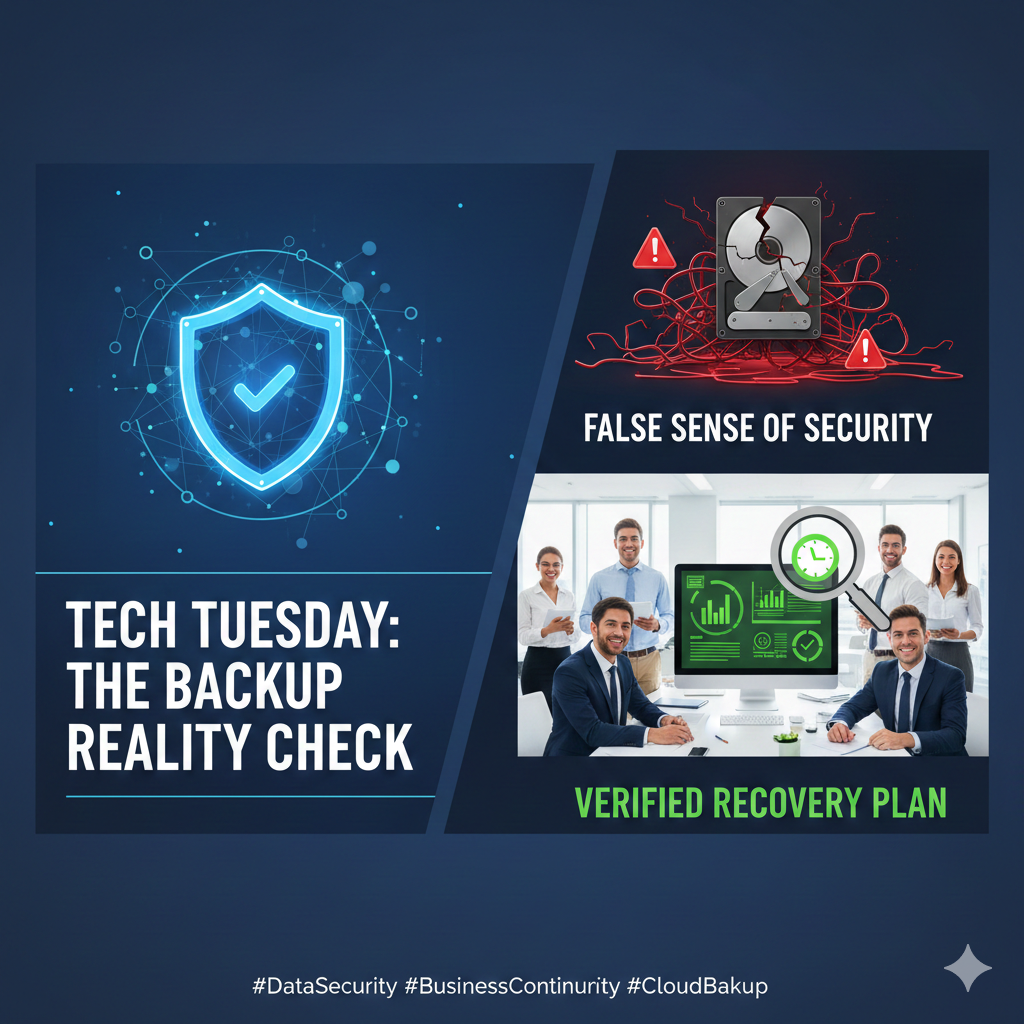
It’s a phrase often uttered with confidence: “Oh, don’t worry, we have a backup.”
In today’s data-driven world, this statement, while reassuring on the surface, can hide a dangerous truth. Having a backup is one thing; having a recoverable, verified, and rapidly deployable backup is entirely another.
Think of it this way: You wouldn’t buy a fire extinguisher, put it in the corner, and assume it works without ever checking its pressure gauge or expiration date, right? Your company’s data—the lifeblood of your operations—deserves the same rigorous scrutiny.
The False Sense of Security: What “Having a Backup” Really Means (and Doesn’t Mean)
Many businesses operate under the misconception that once a backup solution is in place, the job is done. But the path from “backed up” to “fully restored” is fraught with potential pitfalls.
Common Backup Blinders:
- “Set it and Forget It” Mentality: Backup systems are often configured once and then largely ignored. Over time, changes in your IT environment (new servers, cloud migrations, application updates) can silently break backup jobs.
- Unverified Data Integrity: Your backup files might exist, but are they corrupt? Are they complete? A backup job can report “success” even if it’s only capturing empty files or partial data sets.
- Slow or Non-Existent Recovery Processes: Can you restore quickly? Do you know the exact steps? A backup without a tested recovery plan is like having a spare tire but no jack or wrench.
- Single Point of Failure: Relying on a single backup location (e.g., one external drive, one cloud provider region) exposes you to significant risk if that location fails or is compromised.
- Lack of Documentation: Who knows how to initiate a restore if your primary IT person is unavailable? Without clear, accessible documentation, panic can set in during a crisis.
Why Regular Backup Verification Isn’t Optional – It’s Essential
Imagine a scenario: a cyberattack encrypts all your critical files, or a hardware failure brings your main server crashing down. Your business grinds to a halt. Every minute of downtime costs you money, customer trust, and reputation.
This is where a verified recovery plan becomes your ultimate insurance policy. Regular verification means:
- You know your backups are working.
- You know your data is intact and uncorrupted.
- You know exactly how long a restore will take.
- Your team is trained and ready to execute the recovery process.
Action Items: Your Data Backup Reality Check Checklist
Don’t wait for a disaster to discover your backups aren’t what you thought they were. Take these proactive steps now:
- Identify ALL Critical Data: Make a comprehensive list of every piece of data essential to your business operations. This includes databases, documents, emails, configurations, CRM data, financial records, etc.
- Know Your RTO & RPO:
- Recovery Time Objective (RTO): How quickly must you be back online after an outage?
- Recovery Point Objective (RPO): How much data can you afford to lose (i.e., how far back can your last backup be)? These metrics will guide your backup strategy.
- Conduct Regular Test Restores: This is the most crucial step. Schedule periodic, simulated disaster recovery drills. Restore a sample of data from your backup to a separate, isolated environment. Verify its integrity and accessibility.
- Pro Tip: Don’t just restore a single file. Test a full system restore if possible, or at least a critical application database.
- Document Your Recovery Process: Create a clear, step-by-step guide for restoring data. Store it in an accessible, non-networked location (e.g., a printed copy, a cloud drive accessible via personal devices) so it’s available even if your main systems are down.
- Review Off-Site Storage: Ensure your critical backups are stored in a physically separate location from your primary data, preferably in a geographically diverse data center or cloud region.
- Regularly Review Your Backup Strategy: Your business changes, and so should your backup strategy. At least annually, review your RTO/RPO, backup tools, and processes to ensure they still meet your evolving needs.
Ready for a Deeper Dive? Let’s Talk.
The peace of mind that comes from knowing your data is truly secure and recoverable is invaluable. If you’re unsure about the robustness of your current backup and disaster recovery plan, or if it’s been a while since your last verification, now is the time to act.
We can help you evaluate your current setup, identify vulnerabilities, and develop a rock-solid data protection strategy tailored to your specific business needs.
